Showing posts sorted by date for query tax. Sort by relevance Show all posts

Wednesday, May 27, 2026

Are garden offices yield drivers?

"For most of the past decade, garden rooms sat in the homeowner trend column, first as a lifestyle upgrade and then as a lockdown solution that quietly outlived the pandemic. In 2026, they have become something more interesting for property investors: a low-friction asset-improvement tool with potential impact on rental yield, tenant retention and exit value. Add permitted development rules, limited EPC disruption and no separate council tax treatment where the room remains ancillary, and the back garden starts to look less like unused space and more like a portfolio lever."

For more on this, see the story on Property Investor Today.

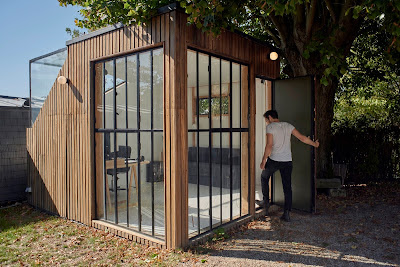
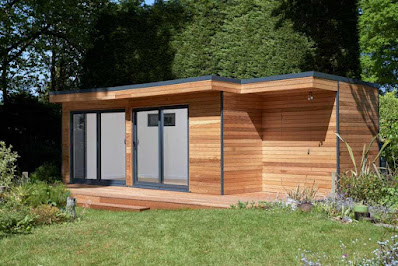
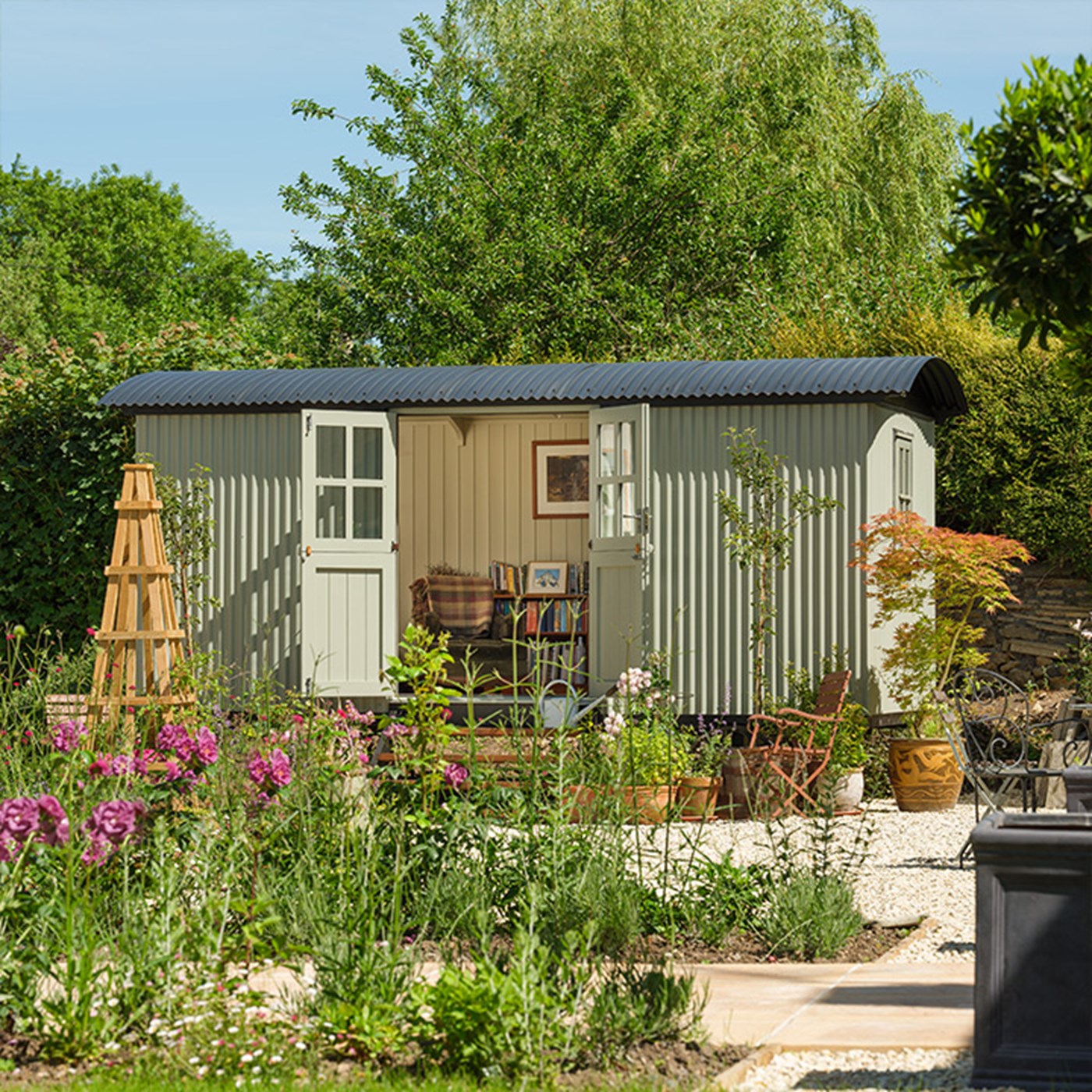
Images courtesy Smart Modular Buildings 

------------------------------------------------------------------------

 
Wednesday posts are sponsored by Booths Garden Studios, the UK's No.1 supplier of zero maintenance and portable garden studios


Wednesday, January 14, 2026

France’s 2026 ‘garden shed’ tax rates drop

Interesting news reported by The Connexion, which has been producing French news in English for nearly 25 years, to update us on what is known as the French 'garden shed' tax.

This taxe d’aménagement levy is imposed on a per m² basis for a variety of property improvements including garden offices/buildings, and has happily fallen a smidgeon over 4% for 2026, the first drop for nearly a decade as against annual rises (most recently 1.76% in 2025, 3.4% in 2024, and 8% in 2023)

The reason for the decrease is a bit complicated but essentially it's because it's not linked to inflation rates, but is based on a special construction cost index which is currently in favourable homeowner territory.

------------------------------------------------------------------------

 
Wednesday posts are sponsored by Booths Garden Studios, the UK's No.1 supplier of zero maintenance and portable garden studios


Monday, January 12, 2026

Council Tax discount for Mudeford beach huts to end

Bournemouth, Christchurch and Poole Council (BCP) Council has announced plans to charge full second home Council Tax for beach huts at Mudeford Spit and Hengistbury Head. Although the council says that money raised from the changes will help support local services, this has naturally not gone down well with hut owners.

The council plans to change the classification of the huts that were historically subject to a 50% Council Tax discount.

The change recognises that the huts, which can sell for between £400,000 and £575,000, should be defined as holiday homes. This is where a home can be used for part of the year, is not a main residence, and is furnished.

So from April the huts will be classified as Class A second homes (with planning restrictions), in accordance with professional opinion and will be subject to full Council Tax. The Council Tax discount previously applied to these huts will be removed, and a standard 100% Council Tax charge will apply.

Council Tax has not yet been set for 2026/27 but based on 2025/26 charges for a band A property and removing the 50% discount, owners will see their bills increase to £1,503 per year, or just over £60 per month.

This change will generate an additional £211,000 for the council to support essential local services for residents, as well as additional funds raised through the precept for fire and police services. This decision replaces legacy arrangements inherited from former Bournemouth and Christchurch councils.

Just over 340 beach huts will be affected by this change, with 231 owned by non-residents of the BCP Council area. All huts are in the lowest Council Tax band A.

Cllr Mike Cox, Cabinet Member for Finance said: “BCP Council, like all local authorities across England, faces an unprecedented, ongoing financial crisis and the latest government settlement does not address this. As a result of this severe financial pressure, the council must use all levers at its disposal to raise funds to protect essential services important to our residents.

“Beach huts on Mudeford Spit often sell for between £400,000 and £575,000 - more than the £313,000 average price, according to the Office for National Statistics, of a home in Bournemouth, Christchurch and Poole, yet historically, owners have been given discounts on Council Tax. And, while we welcome all those who want to enjoy our beautiful coastline, we must recognise that this brings extra demand for services such as beach cleaning and flood protection – the cost of which is mostly borne by our residents.

“This change delivers fairness and consistency for all owners of second homes in the area. We understand this change may be disappointing for some owners, but it is important to apply Council Tax policy consistently and fairly across the BCP area.”

Photo courtesy Ben Salter via Flickr CC BY 2.0

***********************************************

Monday's posts are sponsored by Smart Modular Buildings, the UK's best garden room company


Friday, January 09, 2026

Managers are warming to 'workations' says new report


New research from the Chartered Management Institute indicates that while one in five UK managers have taken what they call a “workation” - working remotely from a location away from their usual home or office - strong support for this emerging trend of flexible working depends heavily on the presence of clear, well-managed organisational policies.

The research also highlights a striking difference in how workations are treated if organisations have invested time to create a clear policy. While 52% of workers whose organisations don’t prohibit “workations” believe their manager would be supportive of workations, and 38% say the same of their organisation, these figures rise dramatically among those employers that have formal policies. In those circumstances, 84% report managerial support and 86% organisational support, compared with just 48% and 29% respectively among those without a policy.

The data shows that workations are far more successful when supported by robust guidance. Among managers whose organisations have a formal policy, more than half (56%) say it includes prior manager approval. Other common safeguards include guidance on data protection and cybersecurity (45%) and prior HR approval (38%). 

Many policies also set out restrictions on days (35%), devices (33%) and permitted locations (32%), as well as expectations around working hours (25%) and compliance with local tax and visa rules (24%).

When asked about potential gains from allowing workations, managers identified increased employee wellbeing and mental health (35%) and improved work-life balance (33%) as the top benefits of workations. However, concerns remain around organisational risks, with 29% citing potential data security or compliance issues.

Petra Wilton, Director of Policy and External Affairs at CMI, said: "If organisations want to make ‘workations’ work, they must put clear, transparent rules in place and actively manage them. Where strong guidance exists, managers are far more confident and supportive. As with any form of flexible working, it’s skilled management, not good intentions alone, that determines success."

-----------------------------------------------------------------------

Friday posts are sponsored by Warwick Buildings, manufacturers of outstanding quality timber buildings. Click here for more information


Monday, January 27, 2025

France’s ‘garden shed tax’ 2025 updates

Important news about the garden office and studio situation in France via the fine folk at The Connexion who report that what has become known as the 'garden shed tax' or taxe d’aménagement has gone up this year.

The rules are complex (as they are in the UK) but it's essentially focused on any extensions or separate builds - and including mobile homes - with specs of 5m² or greater and have walls of 1.8m or higher. The calculation also varies between regions but the base figure has gone up to  €930 per m² ( €110 higher than it was three years ago)
 everywhere except in Ile-de-France where it is ow €1,054 per m². Connexion also wars that the tax folk are using AI-based detection services to hunt down any undeclared extensions.

Image courtesy France-based garden studio specialist Rêves &  Bois whose Freyja model is pictured.

------------------------------------------------

 
Monday posts are sponsored by Cosy Garden Rooms, the UK's No. 1 bespoke garden room designer and builder.

Monday, December 09, 2024

Solar garden office pod on wheels


From Layzee Living comes this self-contained, off-grid, garden office pod, a hybrid which means you can use a mix of solar power and an integrated battery system as required (interestingly, it's specifically aimed at companies buying them for employees via a tax free loan system). It measues 2.1m x 2.1m and features include integrated solar panels and hybrid inverter, solar reflective glass, infra-red heating, integrated desk and storage, plus the whole thing is on wheels so you can move it.

------------------------------------------------

 
Monday posts are sponsored by Cosy Garden Rooms, the UK's No. 1 bespoke garden room designer and builder.


Friday, April 05, 2024

Can I reclaim the VAT on the cost of my garden office?

No apologies for returning to the perennial question (s) of garden offices and tax, with Saint & Co Chartered Accountants the latest experts to pitch in with their thoughts on VAT, capital gains, capital allowances, and depreciation. Here's a snippet (click the link above to read the whole thing which is short and to the point):

Can I reclaim the VAT on the cost of my garden office?
If you are VAT registered and build it through your business then absolutely YES. Some key pointers below:
*Ensure the business pays for all costs, you cannot claim the vat back if you pay personally
*If you are planning to use the garden office for personal use as well you are only able to claim back a portion of the VAT
*Clients under the flat rate VAT scheme can only reclaim capital purchases no less than £2,000. VAT cannot be reclaimed for services. Ensure materials are bought separately to any installation costs
As always, we recommend you talk to your tax advisor before taking any financial decisions.

-------------------------------------------------------------------------

Friday posts are sponsored by Warwick Buildings, manufacturers of outstanding quality timber buildings. Click here for more information.

Thursday, March 14, 2024

Mudeford beach hut on sale for £480k


Brace yourself for the start of a new season of remarkable asking prices for beach huts. The latest comes from our old friend Mudeford, Christchurch, Dorset. On with beach hut specialists Denisons, it's a smidgeon under £500,000 (bought originally for £400 in the 1950s by the same family which has owned it all this time). Although the 16ft x 13ft 'Salad Days' hut is extremely well fitted out - sleeps seven (at a push), mezzanine, fridge freezer, gas cooker, camping toilet - it doesn't actually face the sea. Plus you have to factor in council tax of £630 and an annual license fee of nearly £3,000. If you're interested, do have a look at the Mudeford Sandbank Beach Hut Handbook.

-------------------------------------------------------

 Thursday posts are sponsored by Cabin Master: garden offices and   
 studios to fit any size garden. Top quality contemporary or traditional
 buildings.

Thursday, February 23, 2023

Can you buy a garden office through a Limited Company?

Adding their own thoughts to this often-asked about issue is Farnell Clarke in a useful piece on their website. They look at a range of issues from corporation tax allowances on the construction of a garden office and reclaiming VAT on the cost of a garden office to 'What if I close my Limited Company?'. Here's a snippit:

If/when you choose to perhaps close your limited company, and it owns the garden office which you will be keeping, you will need to purchase it from your company. It will need to be bought at the market value at that point (remember if your company is VAT registered to consider this for the sale too). It is often a good idea to have a restoration clause at the end of the contract.

It's well worth a read via the link above.

Image courtesy Garden Spaces

-------------------------------------------------------

Thursday posts are sponsored by Cabin Master: garden offices and studios to fit any size garden. Top quality contemporary or traditional buildings.


Thursday, January 05, 2023

Ultimate Space Company: How to lease a garden office

The Hove and Bath-based Ultimate Space Company offer this rather attractive and compact hexagonal garden office pod, coming in at 2.1m x 1.85m x 2.5m, with a circular roof light and full-length double-glazed door and window.

It's fully insulated (Soundhush acoustic panels and Kingspan Quadcore wall panels), claims to need no ongoing maintenance (it's made of aluminium, glass and steel), and arrives ready to go with an adjustable desk and shelving, LED lights, plus a wifi router and fuse board. There's a choice of five colours for the internal panels so you can go all the same colour or mix and match - the panels have a simple interchangeable hanging system. The solid steel chassis sits on six large adjustable feet.

What's particularly interesting is that they are also targeting employers as well as employees, emphasising that shedworking is "The most cost effective, tax efficient and sustainable benefit for every business to attract and maintain staff." While you can buy them outright, they also offer a range of lease options starting from £319 + vat per month (plus £750 initial installation cost).

-------------------------------------------------------

Thursday posts are sponsored by Cabin Master: garden offices and studios to fit any size garden. Top quality contemporary or traditional buildings.

Thursday, February 10, 2022

Garden offices in France


The venerable Uncle Wilco pointed out to me the other day that the regulations for building garden offices - the 'taxe d’aménagement' -  in France are about to change. There's a good piece in Complete France magazine about what they call the 'garden shed tax' which is a must-read if this applies to you. Here's a snippet:

The taxe d’aménagement (development tax) applies to home development projects that are subject to planning permission eg. construction of new sheds or extensions such as conservatories. The ‘valeur forfaitaire’, (standard value) per m², used to calculate tax for these new constructions is reviewed each year in relation to changes in the construction cost index. For 2022, the standard values have been set at €820/m2 outside Île-de-France (compared to €767/m² in 2021) and €929/m² in Île-de-France (compared to €870/m² in 2021). 

Image courtesy French architects JCPCDR

-------------------------------------------------------

Thursday posts are sponsored by Cabin Master: garden offices and studios to fit any size garden. Top quality contemporary or traditional buildings.


Saturday, January 22, 2022

Claiming tax relief on your garden office


No apologies for returning to this perennial issue, especially at this time of year when tax is on our minds. The latest experts to examine shedworking taxes are Oxford-based Ridgefield Consulting. Particularly useful in their roundup is what you can't claim as much as what you can. Here's a snippet on the plant and machinery allowance:

Although there is no allowance that will help cover the initial cost of the garden office, the cost of instillation for utilities such as electrical wiring, plumbing or thermal insulations can be covered as a capital allowance. This means that the cost of these can be deducted from your company’s profits to reduce your corporation tax bill. The plant and machinery allowance does not apply to anything that is not outrightly owned by the company, so if you hire any equipment such as air-conditioning just over the summer months, this cannot be claimed for. Other capital allowances that can be claimed include furniture such as desk, office chair, shelving, floor lamp etc.

But as we always advise, please do talk to your own tax adviser before taking any action.

Image courtesy  Eden Garden Rooms

---------------------------------------------------------------------------

Welcome to your new teak garden room from Moonalabs. Unparalleled quality at an affordable price.


Sunday, September 19, 2021

Claiming tax relief for a garden office

And still the advice on tax and garden offices keeps coming, the latest thoughts coming from chartered accountants M.B. McGrady & Co. Full article at the link but here are the key takeaways:

  1. Tax relief cannot usually be claimed on the cost of a garden office building
  2. However, tax relief can be claimed on furnishings and equipment used in the building
  3. Capital allowances can be claimed on thermal insulation and some wiring/plumbing
  4. Tax relief can be claimed on running costs, such as heating, lighting and repairs
  5. VAT can be reclaimed on the costs of the building itself and the ongoing running costs

As always, we recommend talking to your personal financial adviser about all garden office-related tax issues before making any claims.

Image courtesy Moonalabs

-------------------------------------------------------------------------

Sunday posts are sponsored by Henshalls Insurance, specialists in insuring garden offices and other garden buildings. Click here for more information.


Saturday, August 21, 2021

Garden office tax benefits


The most recent issue of chartered accountants McBrides' news update includes pertinent advice about various garden office tax issues. You can read the full thing here (pdf) but here's a snippet:

"It will be permissible for the initial cost of the structure and any other associated costs such as planning costs, architect fees and legal fees to be paid in full by the business. However, these costs will not qualify for tax relief as they will be treated as capital costs. VAT charged on these costs can be recovered in full if the garden office is intended for 100% business use. But if there is an intention for private use as well as business use, then the private proportion of the VAT should not be reclaimed (this will need to be based on a fair and reasonable calculation)."

Image courtesy SMART

-----------------------------------------------------

Saturday posts are sponsored by woowoo waterless toilets, the best toilet for your garden office


Monday, March 22, 2021

Hybrid working the way forward, says major new report

Post Pandemic Places, a major new report from think tank Demos and Legal & General, has found that huge increases in shedworking and homeworking, coupled with a desire for continued flexibility, could support significant increases in local spending. Consequently, they are calling on the government to incentivise the establishment of more local offices and hybrid-working initiatives.

According to the new research, 65% of the working population were forced to change their place of work during 2020 as a result of the pandemic. Of these, 79% want to continue to have some form of remote working in future. However, the findings - taken from a poll of 20,000 adults - indicate that a desire to work remotely is not necessarily the same as wanting to work from home all of the time.

Relatively high levels of support were recorded for ‘local desk space’. This was particularly stark among younger people, with one fifth of those in their twenties rating it their top priority for employment premises in their locality. When asked how people were intending to spend their money once the restrictions were over, the research found that 36% of people plan to spend more money locally than they did before the pandemic. Among people required to work from home, this rose to 47%.

The report suggests there is an opportunity for government and business to support more hybrid working and flexible local desk space, to give people the flexibility they want and also make progress on the 'levelling up' agenda, by spreading spending power across a wider geographic area.

As a result of its findings, Demos is calling on the Government to promote remote working as a regeneration tool. An example would be introducing employee tax incentives, such as ‘remote-working vouchers’, similar in design to the current childcare voucher scheme.

"Throughout the pandemic, an overwhelming number of people were forced to change the location they work in, whether they were required to work from home or furloughed," said Kitty Ussher, Chief Economic Advisor at Demos and author of the report. "But for those people, as our new report out today demonstrates, they’ve built a new-found relationship with their local area that’s here to stay beyond the pandemic.

"This major shift to remote and flexible working has led to a desire for spending more cash and more time locally. In other words, flexible working has the opportunity to make local areas thrive beyond expectations. This presents an opportunity for Government to actively support hybrid working, not just because it’s what people want and because of its long-understood potential to narrow the gender pay gap, but also as a key tool for local regeneration."

Image courtesy Warwick Buildings 

--------------------------------------

Monday posts are sponsored by eDEN Garden Rooms. Stunning, bespoke high quality garden rooms, to suit your unique space and style


Friday, March 12, 2021

Garden office boom, tax holidays and headaches

The boom in garden offices can create tax holidays and headaches when homeowners choose to sell, according to tax expert Natasha Heron from chartered accountants and tax advisers Hillier Hopkins.

“Sellers, buyers and their estate agents often fail to realise that a garden office if it meets certain criteria can lead to quite substantial savings for stamp duty land tax under what is called multiple dwellings relief," says Heron, who adds that multiple dwellings relief will usually see stamp duty land tax charged not on the total sale price of a home but on the sale price divided by the number of properties acquired regardless of their size or value, and that can represent a significant saving.

“The relief does, however, come with strict qualifying criteria, with a garden office needing to be independent from the main house and with its own cooking facilities and bathroom. Independent does not necessarily mean detached, but attached garden offices, or granny annexes, will need a separate entrance. Savvy sellers can use this relief to increase the sale value of their home, sharing the reduced stamp duty land tax liability with buyer.”

But warns Heron, business owners that have funded a garden office through their business could face an unexpected capital gains tax bill.

“Garden offices can add significant value to a property and consideration is required if that space is classed as a business asset. Capital Gains Tax (CGT) does not usually apply to your primary residence when you sell it. However, it may apply if part of your residence is used solely for business. Business owners will need to keep a watchful eye particularly is a sale is on the cards any time soon.” 

As always on Shedworking, we strongly advise talking to your tax adviser/accountant about all matters relating to your tax.

Image courtesy Plankbridge

---------------------------------------------------------------------------

Friday posts are sponsored by Warwick Buildings, manufacturers of outstanding quality timber buildings. Click here for more information.


Wednesday, February 10, 2021

Garden offices: tax implications for the employer

With the rise in sales of garden offices there has been a noticeable increase in expert advice from accountants and tax specialists about the various financial implications of becoming a shedworker. The latest comes from financial experts Larking Gowen and here's a snippet:

Firstly, in providing the pod, and in relation to the associated benefit charge, there will be a Class 1A National Insurance contribution charge (13.8%) for the employer. In purchasing a pod, the company would incur a capital expense. Can it make a capital allowances claim to obtain tax relief rather than getting a deduction against trading profits? Unfortunately, HMRC don’t accept mobile prefabricated structures as being within the scope of plant and machinery allowances. Whilst there is now a separate structures and building allowance, this requires the company to have an interest in the underlying land, again causing any claim to fail.

Well worth a browse. 

Image courtesy Plankbridge

--------------------------------------

Wednesday’s posts are sponsored by Norwegian Log Buildings  - Log cabins and garden buildings for a better quality of life. Click here for more details.


Sunday, February 07, 2021

Can a limited company pay for a garden office?

More advice on the financial side of garden offices from accountants Churchillknight which specialises in working with freelancers and self-employed workers. Here's a snippet (commenting on the question in this post's headline:

"The short answer is yes, it can. However, it’s unlikely you will be able to claim tax relief on the office itself as it would be classed as capital expenditure. And, as a structure (even if it’s only a mobile one), it doesn’t count as an allowable expense against your business profits. If you are considering building a garden office be prepared that any costs relating to design, planning, building and installation will need to be paid for in full. This doesn’t mean that your limited company can’t pay for it, just that any of the costs listed above will not be tax-deductible."

Well worth a look. 

Image courtesy Warwick Buildings

-----------------------------------------------------

Sunday posts are sponsored by woowoo waterless toilets, the best toilet for your garden office


Wednesday, January 13, 2021

Garden office tax planning: business ownership

In the third and final part of this excellent series by Helen Thornley, Technical Officer at The Association of Taxation Technicians on accountingWEB (see here for the previous two) she looks a a wide range of issues including structures and buildings allowance, VAT, and what happens when you come to sell your house. Here's a snippet, talking about 'benefit in kind':

One approach would be to view the pod as an asset which has been lent to the director and is available for their use, but to which legal title has not been transferred. If the pod does not fall within the special rules for living accommodation, then the general rules will apply. The HMRC view is that living accommodation is something that gives the occupant the necessary facilities to live domestic life independently without reliance on others to supply basic needs, so offices and workshops are excluded.

In this case, unless the pod is hired, the cash equivalent of the pod to be assessed each year as a benefit will be 20% of the market value of the asset when first made available – most likely the cost of the asset when new. This is likely to be more significant than the benefit in kind for living accommodation and, if the pod is to be kept long term, it might be better for the director who wants personal use to pay to install it privately. In the first tax year, this benefit can be apportioned so the individual is only taxed on the number of days since the pod was first made available.

As with previous blog posts, this is well worth reading.

Photo courtesy Warwick Buildings

--------------------------------------

Wednesday’s posts are sponsored by Norwegian Log Buildings  - Log cabins and garden buildings for a better quality of life. Click here for more details.


Wednesday, December 16, 2020

Garden office tax planning: personal ownership

This great little series looking at tax and shedworking by Helen Thornley, Technical Officer at The Association of Taxation Technicians, continues on accountingWEB with Helen's looking at running costs, rental charges, expense recharge, and private residence relief (among other issues). Here's a snippet about capital gains tax:

Where the pod has any private use, that should avoid a restriction on private residence relief (PRR) for capital gains tax, when the individual comes to sell their home with or without the pod.

This CGT relief is denied on any part of a dwelling house which is used exclusively for the purposes of a trade or business (s224(1) TCGA 1992). Where there is such exclusive use, then the gain relating to that room or area needs to be apportioned out and tax charged. The same principle applies to any free-standing structure like a pod in the garden of the dwelling and the land on which it stands.

Provided that the new home office is not used exclusively for work purposes PRR should not be restricted. While the test of ‘exclusive’ business use is quite high, the HMRC manuals do suggest that occasional or minor private use is insufficient to avoid the PRR restriction and it expects to see regular residential use.

There is unlikely to be an issue where the pod doubles as a play room, or has a sofa and television in the office to watch TV with (or away from) the family, or contains gym or craft equipment – pods can be put to lots of other purposes outside working hours.

Image courtesy eDEN Garden Rooms

--------------------------------------

Wednesday’s posts are sponsored by Norwegian Log Buildings  - Log cabins and garden buildings for a better quality of life. Click here for more details.